
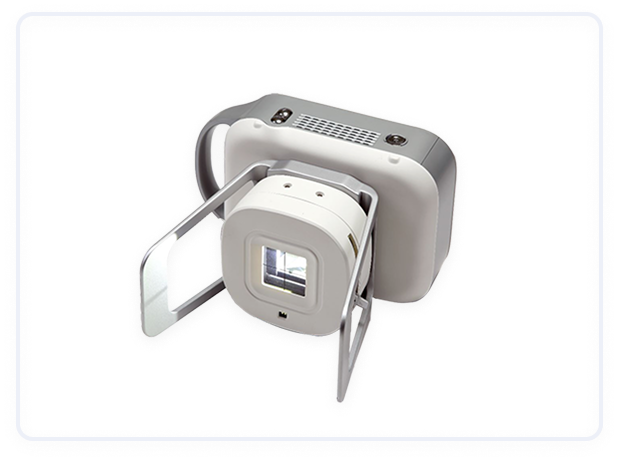
Portable X-Ray Machine
A portable X-ray machine is a compact and mobile version of traditional X-ray equipment that allows for X-ray imaging outside the radiology department. These machines are designed for convenient use in settings where patients cannot be easily moved to a stationary X-ray machine, such as patient rooms, intensive care units (ICUs), emergency departments, or in home care and field conditions. They provide high-quality imaging with the added benefit of mobility.
Key Features of Portable X-Ray Machines
Compact and Lightweight Design:
Portable X-ray machines are designed to be compact, lightweight, and easy to transport. Their size allows them to be moved easily between hospital rooms, emergency departments, or even out in the field for mobile health services.
Battery-Powered Operation:
Many portable X-ray machines are battery-operated, meaning they do not require a direct power source and can be used in remote locations or during emergencies where electrical outlets may be unavailable. Batteries can last several hours, depending on the machine's usage.
Digital Imaging Technology:
Modern portable X-ray machines often use digital imaging sensors instead of traditional film. These sensors capture the X-ray data and provide instant images that can be viewed on a connected computer, improving the speed and efficiency of diagnosis.
Wireless connectivity allows these images to be stored or shared electronically, making it easier for healthcare providers to access and share results.
Adjustable Settings:
Portable X-ray machines come with adjustable settings for radiation exposure, including kVp (kilovolt peak), mAs (milliampere-seconds), and exposure time, allowing technicians to adjust the settings based on the patient and area being examined.
Collimator and Focused Beam:
Portable X-ray machines include collimators to narrow the X-ray beam to the area of interest, ensuring that the radiation is focused and reducing exposure to surrounding tissues.
Ease of Mobility:
Wheeled carts or mobile stands allow easy transport of the machine between rooms or settings. Many models also have ergonomic handles for easy maneuverability, ensuring that healthcare professionals can navigate them through hallways and crowded spaces.
Quick Imaging and Results:
Since these machines use digital detectors, images are available almost instantly after exposure, making them ideal for quick decision-making in emergencies. Some systems allow images to be reviewed on the spot or transferred to a central PACS (Picture Archiving and Communication System) for review by radiologists.
Radiation Protection:
Portable X-ray machines are designed with safety in mind. They come equipped with lead shielding and collimation to minimize unnecessary radiation exposure to patients and healthcare workers. The compact design often includes integrated safety features to limit scatter radiation.
Durability and Reliability:
Given the conditions under which portable X-ray machines are often used (e.g., emergency rooms, outdoor settings, or during patient transport), these machines are designed to be robust and durable. They can withstand regular handling, movement, and occasional rough conditions.
Various industries
Request More Information
Contact Us to learn more about our offerings or Request a Quote to get started today!
Contact Us

