
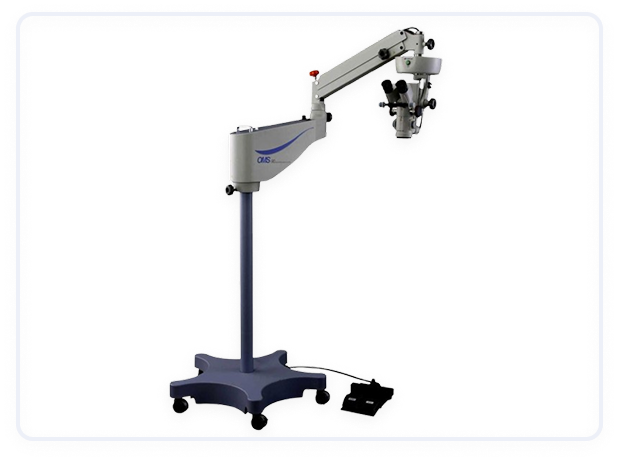
Operating Microscopes
An operating microscope is a specialized type of microscope designed for use in surgical procedures to provide magnified, high-resolution views of the surgical site. These microscopes are commonly used in medical and dental surgeries, as well as in research settings, where precision and a detailed view of tissues are critical. They allow surgeons to perform intricate procedures with greater accuracy and minimize the risk of complications by offering a clear, magnified image of the structures they are working on.
Key Features of Operating Microscopes
High Magnification:
Operating microscopes typically offer high magnification levels (usually between 4x to 40x) that allow surgeons to see fine details of tissues, blood vessels, nerves, and other microscopic structures that would be difficult to visualize with the naked eye.
Adjustable Illumination:
These microscopes come equipped with adjustable light sources, typically fiber-optic lighting or LED lights, to provide optimal illumination of the surgical area. Proper lighting is essential to minimize shadows and ensure that the surgeon can see fine details during the operation.
Ergonomic Design:
The microscope is designed to be used in an ergonomic way, allowing the surgeon to maintain a comfortable working posture during long procedures. The microscope is often mounted on a ceiling arm or mobile stand, allowing the surgeon to adjust the microscope's position easily.
Stereo Visualization:
Most operating microscopes provide stereo vision, allowing surgeons to view the surgical site in three dimensions (3D), enhancing depth perception and enabling more precise movements.
Coaxial Illumination:
Coaxial illumination ensures that the light source is aligned with the optical axis of the microscope. This feature reduces shadowing and enhances clarity, allowing the surgeon to see the tissue without distortion.
Binocular or Trinocular Configuration:
Binocular microscopes have two eyepieces for the surgeon to view through, while trinocular microscopes have an additional eyepiece for a camera to be attached, enabling the procedure to be recorded or shared for educational or documentation purposes.
Variable Magnification:
Many operating microscopes feature a zoom or continuous magnification system, which allows the surgeon to seamlessly change the level of magnification during the procedure without changing the objective lens.
Various industries
Request More Information
Contact Us to learn more about our offerings or Request a Quote to get started today!
Contact Us

