
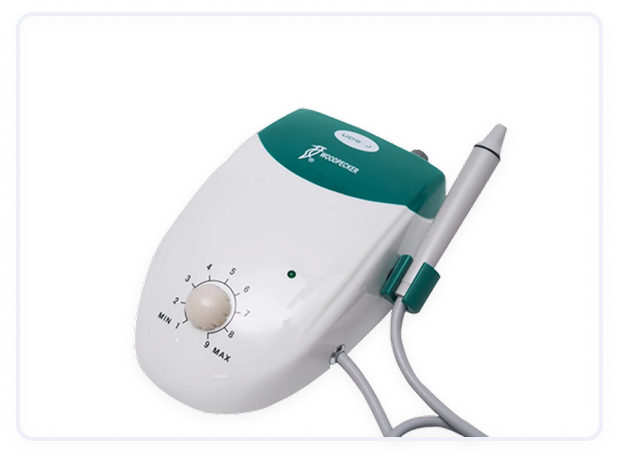
Ultrasonic Scaler
A Rhinomanometer is a diagnostic instrument used to measure nasal airflow resistance and assess the functionality of the nasal passages. It is mainly used in otorhinolaryngology (ENT) practices to evaluate the degree of nasal obstruction, which can be caused by conditions such as nasal congestion, deviated septum, allergies, or chronic sinusitis. The device provides objective measurements of nasal resistance during both inhalation and exhalation.
Key Features of a Rhinomanometer
Measures Nasal Airflow Resistance:
The rhinomanometer works by measuring the air pressure and airflow in the nasal passages. It calculates the resistance to airflow in the nose by comparing the pressure difference between the two nostrils during inhalation and exhalation.
Objective and Accurate Measurement:
It provides objective data, meaning it does not rely on subjective responses or observations, making it highly reliable for diagnosing and tracking nasal issues.
Assessment of Nasal Patency:
The device is used to evaluate the patency or openness of the nasal airways. It helps identify the severity of nasal blockage and determines whether the obstruction is due to structural issues (e.g., a deviated septum) or functional problems (e.g., swelling from allergies).
Real-Time Results:
Rhinomanometers provide real-time results, allowing healthcare providers to quickly assess nasal airway function and monitor treatment efficacy for conditions like allergic rhinitis, nasal polyps, and deviated nasal septum.
Non-invasive Testing:
The test is completely non-invasive and requires no incisions or blood tests. The patient simply breathes through the nasal passages while measurements are taken.
The procedure is painless and safe, making it ideal for both adult and pediatric patients.
Diagnostic Tool for Various Nasal Disorders:
Helps diagnose and monitor conditions such as nasal polyps, chronic rhinitis, sinusitis, deviated septum, and functional breathing difficulties.
Can also be used to evaluate patients post-surgery, such as after septoplasty or rhinoplasty, to assess the success of the procedure.
Nasal Cycle Monitoring:
The rhinomanometer can assess the nasal cycle, which refers to the natural alternation of nasal airflow between the two nostrils. This test can help detect abnormalities or imbalances in airflow that may be indicative of certain conditions.
Data Storage and Integration:
Some models include data storage capabilities, allowing clinicians to save and track multiple measurements over time to monitor progress or changes in the nasal condition.
Results can be stored and integrated into patient records or electronic health systems for easy access and analysis.
Various industries
Request More Information
Contact Us to learn more about our offerings or Request a Quote to get started today!
Contact Us

